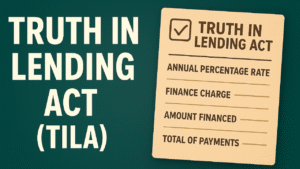
 Understanding the Truth in Lending Act (TILA): What Borrowers and Developers Need to Know
The Truth in Lending Act (TILA) is a cornerstone of consumer protection in the U.S. financial system. Enacted in 1968, TILA was designed to ensure that borrowers receive clear, standardized information about the cost of credit. Whether you’re applying for a mortgage, signing up for a credit card, or using a home equity line of credit (HELOC), TILA helps you understand exactly what you’re agreeing to—before you commit.
For developers and financial professionals building tools for consumer education, understanding TILA is essential. It not only informs how financial data should be presented but also shapes user trust and compliance.
📜 What Is the Truth in Lending Act?
TILA is part of the Consumer Credit Protection Act and is implemented through Regulation Z, which outlines specific disclosure requirements for lenders. Its primary goal is to promote transparency and fairness in lending by requiring creditors to disclose key terms and costs in a standardized format.
Key Disclosures Required by TILA
Under TILA, lenders must provide borrowers with clear information about:
- Annual Percentage Rate (APR): The true cost of borrowing, including interest and fees.
- Finance Charges: Total cost of credit expressed in dollars.
- Amount Financed: The actual loan amount provided to the borrower.
- Payment Schedule: Number, amount, and timing of payments.
- Total of Payments: The total amount the borrower will pay over the life of the loan.
These disclosures must be presented before the loan is finalized, allowing consumers to compare offers and make informed decisions.
🏠 TILA and Mortgage Lending
TILA plays a critical role in mortgage lending, especially for loans secured by a borrower’s home. One of its most powerful protections is the Right of Rescission, which allows borrowers to cancel certain home-secured loans within three business days of signing—without penalty.
This provision applies to:
- Home equity loans
- HELOCs
- Refinances of existing mortgages (with a new lender)
It does not apply to the purchase of a new home.
💳 TILA and Credit Cards
TILA also governs credit card disclosures, requiring issuers to clearly present:
- Interest rates for purchases, cash advances, and balance transfers
- Fees (annual, late payment, over-limit)
- Grace periods
- Minimum payment requirements
These disclosures must be included in monthly statements, promotional materials, and online account interfaces.
🧠 Why TILA Matters for Developers
If you’re building financial calculators, loan comparison tools, or educational plugins for WordPress, TILA offers a blueprint for user-friendly design. By aligning your tools with TILA standards, you can:
- ✅ Build trust with users through transparent data presentation
- ✅ Reduce legal risk by following disclosure best practices
- ✅ Empower users to make informed financial decisions
Practical Tips for TILA-Compliant Tools
- Use clear labels: Replace jargon with plain language (e.g., “Total Cost of Loan” instead of “Finance Charge”).
- Embed tooltips: Offer quick definitions for terms like APR, amortization, and principal.
- Include disclaimers: Clarify that your tool is for educational purposes and not a substitute for professional advice.
- Offer comparisons: Let users see side-by-side loan scenarios with full cost breakdowns.
⚖️ Enforcement and Penalties
TILA is enforced by the Consumer Financial Protection Bureau (CFPB) and violations can result in:
- Civil liability
- Criminal penalties (in cases of willful noncompliance)
- Damages awarded to consumers
Lenders must retain disclosure records for a set period and ensure that all advertising complies with Regulation Z.
🧩 Final Thoughts
The Truth in Lending Act isn’t just a legal requirement—it’s a framework for ethical lending and consumer empowerment. For developers, educators, and financial professionals, embracing its principles means creating tools and content that are transparent, accessible, and trustworthy.